> Tourism > River Tourism


"There was a time," said Bodon Satula (56), sitting under the shade of a tree in Dhapak Gaon and looking towards the Tuni river, "when we hardly spent a day away from the river."
The quiet village in the world-famous Majuli River island in Assam felt full of everyday life. Farmers were returning from the fields, children cycled along the narrow village road, and the Tuni River flowed quietly beside them, as if listening to every passing conversation.
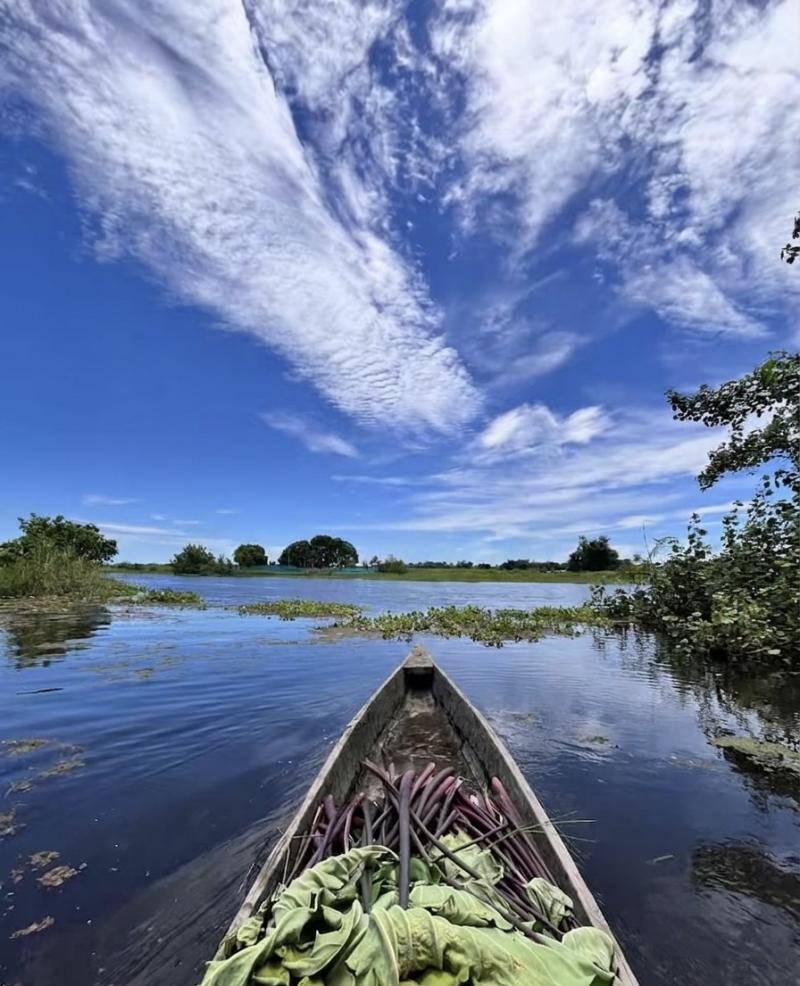
A panoramic view of Tuni River. Photo: Dishaa Borah
His memories were filled with laughter rather than hardship. After school, he and his friends would run straight to the river, diving into its cool water without a second thought. Fishing was more than a livelihood—it was a part of growing up. Whatever fish they caught was sold in the nearby market, and with the little money they earned, the group celebrated together, cooking chicken or pork and enjoying the evening on the riverbank. Those simple moments, he said, remain some of the happiest memories of his life.
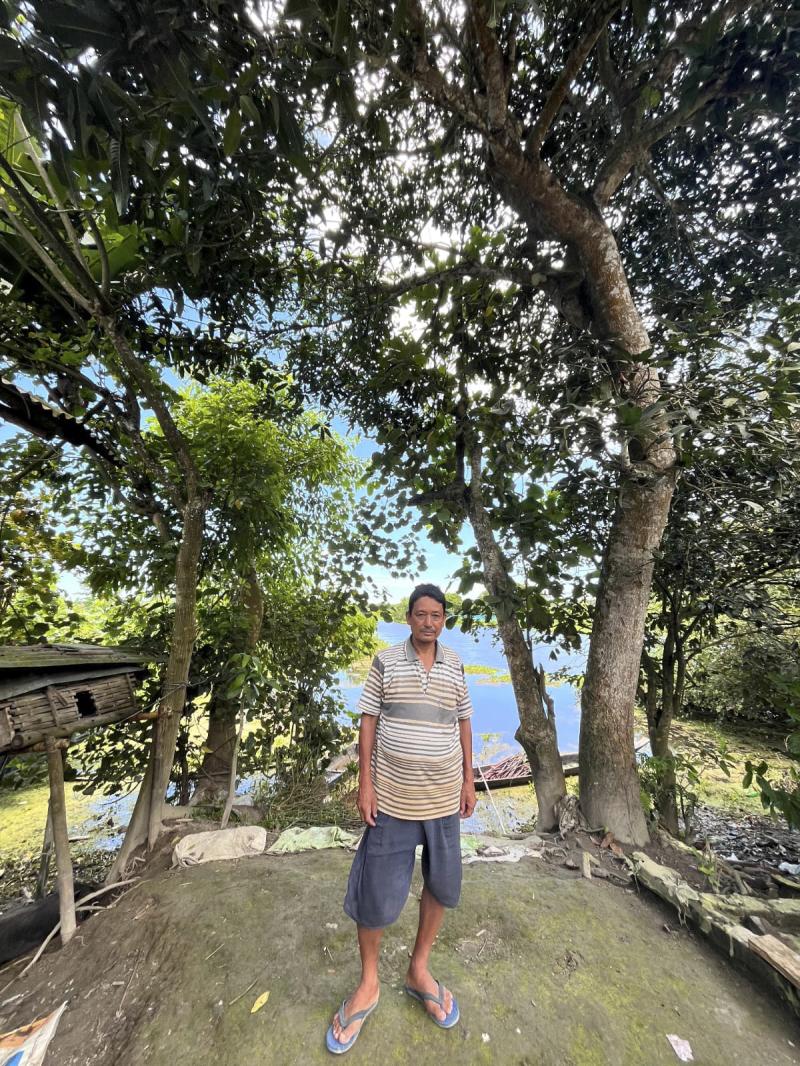
Bodon Satula sharing his memories beside the Tuni River. Photo: Dishaa Borah
Today, Bodon continues to depend on farming and seasonal fishing. However, the river he once knew has changed. The water is no longer clean enough for bathing, fish have become fewer, and the bond that once connected people with the river has slowly weakened.
Every river has a story. Some are written in flowing water, while others survive in the memories of the people who have lived beside them for generations. The story of the Tuni River is one of them.
Hidden within the villages of Majuli, the Tuni River has quietly witnessed changing seasons, childhood laughter, devastating floods, festivals on its banks, and the daily lives of countless families. Once known as an important lifeline of the island, the river connected villages, supported farming and fishing, and became an inseparable part of Majuli's social and cultural landscape. Though time has changed its course and reduced its flow, the bond between the people and the river remains unbroken.
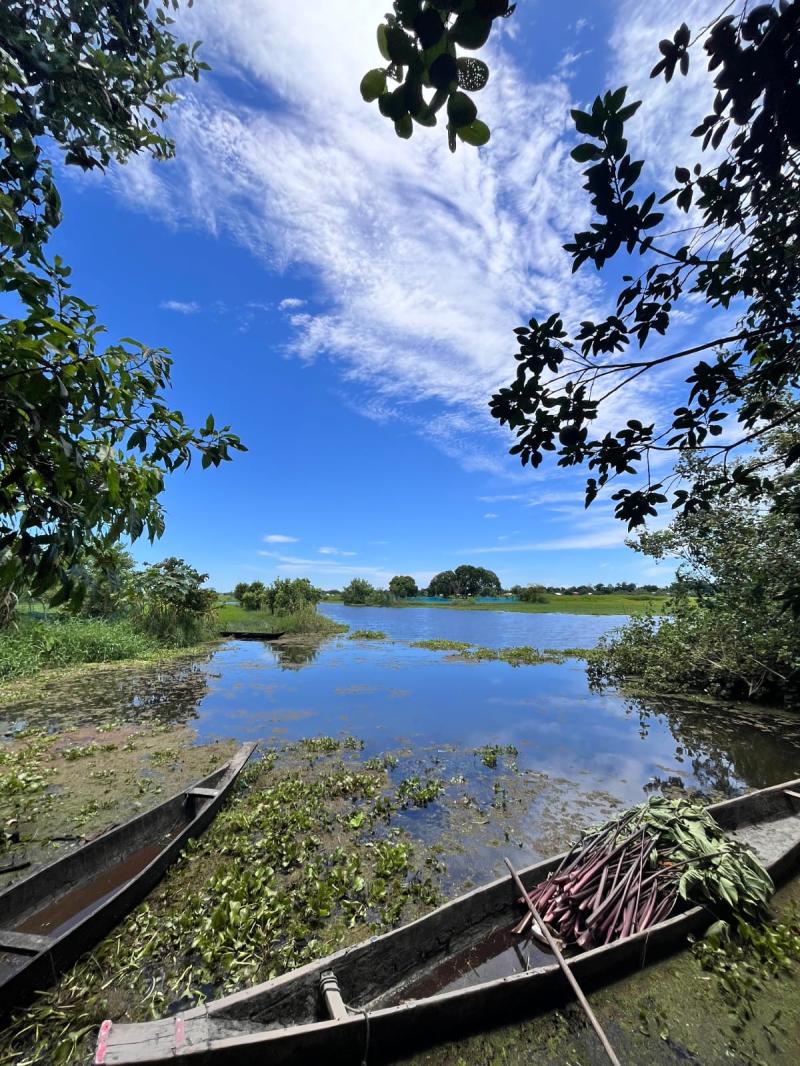
Rejuvenated Tuni River. Photo: Dishaa Borah
Efforts to rejuvenate the river initiated in 2023 has revived the memories, sparked new dreams of strengthening their bond with Tuni.
Our journey along the Tuni River began with a simple question—what does this river mean to the people who still live beside it? The answer was never found in books or official records. It was found in conversations with farmers, fisherfolk, shopkeepers, teachers and elderly villagers, each carrying a different memory but sharing the same hope.
Travelling from one village to another, the river revealed a different face of itself. In one village, it was remembered for the fish that once filled its waters. In another, it reminded people of the floods that washed away homes and fertile land. Elsewhere, it became a place where winter birds arrived every year, where families gathered during festivals, and where villagers now dream of welcoming tourists instead of watching the river slowly disappear.
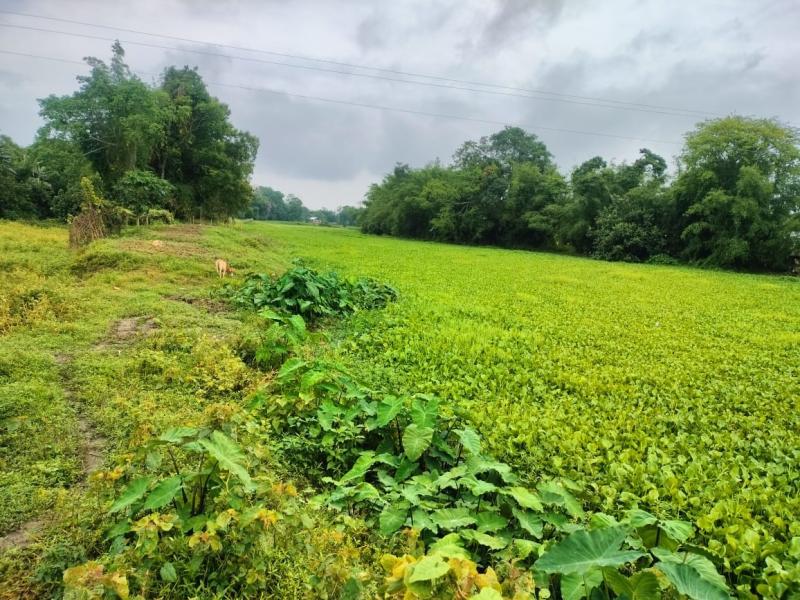
Before the restoration. Photo : Special arrangement through Dr. Rajen Chandra Bora
As we continued our journey, it became clear that every person remembered a different Tuni River. Some remembered the river that fed their families, while others remembered the river that took everything away. Our next stop, Barhola Village, would tell a story of resilience, where life continued despite floods, and hope quietly lived behind the counter of a small village shop.
Leaving Dhapak Gaon, the road narrowed as it wound through stretches of paddy fields before reaching Barhola Village. A small grocery shop stood beside the road, where villagers stopped for their daily essentials. Standing behind the wooden counter was Proniti Saikia (45), welcoming every customer with a smile that gave little hint of the struggles she had endured.
Looking around her shop today, it is difficult to imagine that farming was once the only source of income for her family.
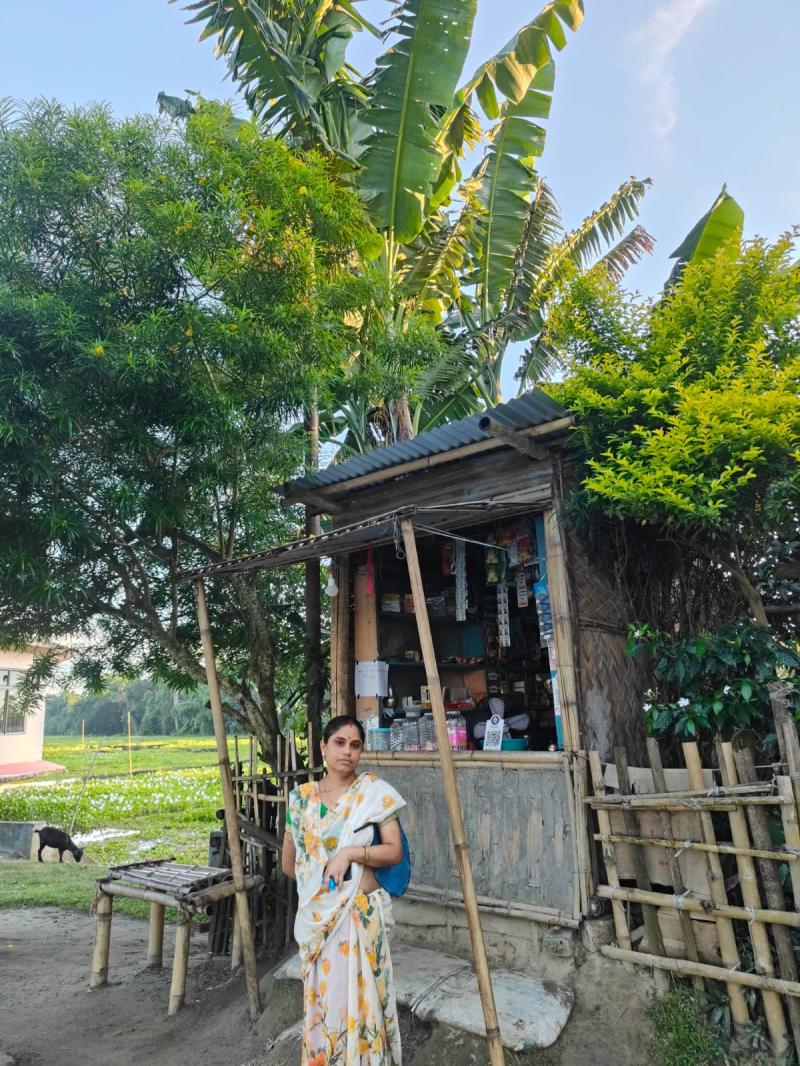
Proniti Saikia at her grocery shop. Photo: Dishaa Borah
"The floods changed everything," she said quietly.
Like many families living close to the Tuni River, they depended on agriculture for years. But almost every monsoon, floodwaters entered their fields, damaging crops and making farming increasingly uncertain. What was once fertile land slowly stopped providing enough to support the family.
Instead of giving up, Proniti chose a different path.
With financial assistance of Rs.10,000 from the Government of Assam under a women's self-help initiative, she opened the small shop she now manages every day. Alongside it, she continues tailoring from home, balancing both occupations to support her family.
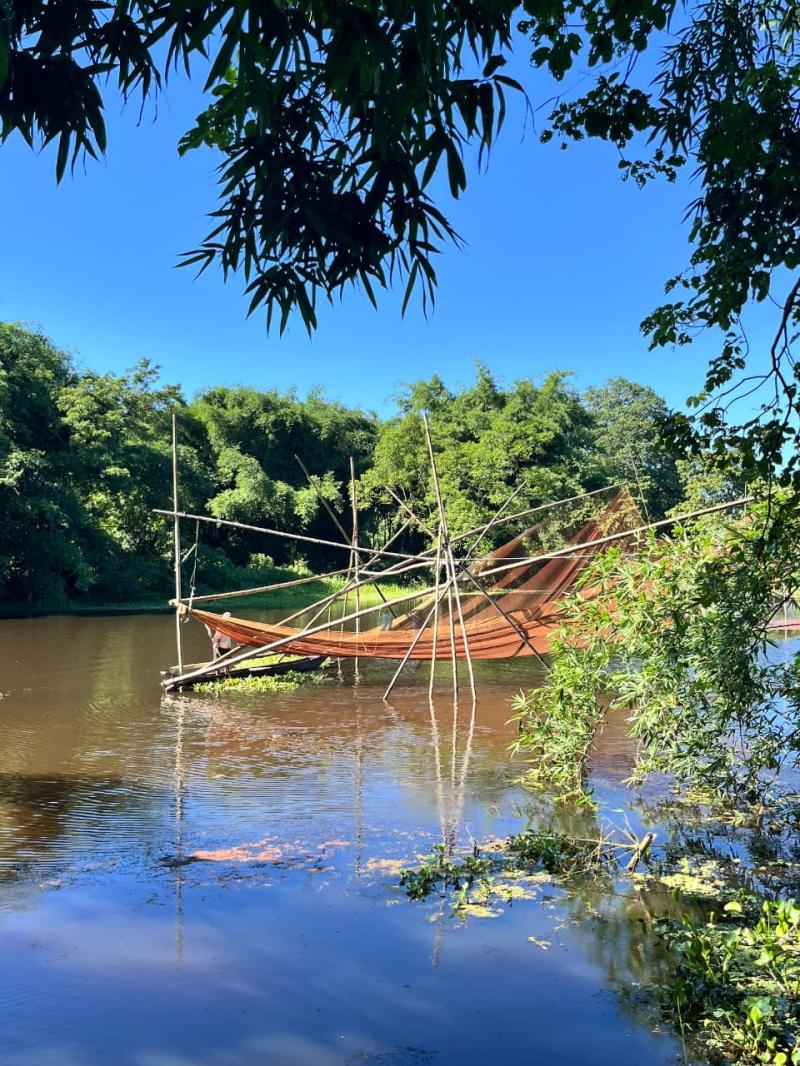
A peaceful stretch of Tuni river near Dadhara village. Pihoto: Dishaa Borah
During winter, she explained, the quiet riverbank becomes livelier. Visitors arrive to watch migratory birds, enjoy the peaceful surroundings, and spend time in nature. The river also becomes a place of celebration during Bihu, Rass festival and Chath Puja etc. when families gather on its banks to offer prayers.
Yet she believes the river has much more to offer.
"The beauty is already here," she said. "People only need a reason to come."
The ongoing rejuvenation project has brought visible changes to this stretch of the river. Cleaning work has already been completed around Barhula, and boating was introduced with the hope of attracting visitors. Although the initiative has not yet achieved the expected response, Proniti remains optimistic. She believes that with better promotion and proper management, tourism could provide new opportunities for local people, especially women and small business owners.
Before leaving, we walked a little further towards the riverbank. The evening breeze gently disturbed the water as a few birds circled overhead. It was easy to understand why the people of Barhula continue to believe in the future of the Tuni. For Proniti, the river is no longer only a reminder of what her family lost—it has become a symbol of what they still hope to gain.
Among all these voices, one name was mentioned again and again. Before the river rejuvenation project became a reality, before machines arrived to clean the riverbed, and before tourism became part of the conversation, one person had already begun fighting for the future of the Tuni River.
The journey led us to Dr. Rajen Chandra Bora, a teacher, a researcher, and above all, a man who refused to let the history of the Tuni River fade away.
Before we met the fishermen who still cast their nets into the Tuni, before speaking with women rebuilding their lives after repeated floods, and before listening to villagers who dream of seeing tourists return to its banks, we were told to meet one person first.
"To understand the Tuni River, you should first talk to Dr. Rajen Chandra Bora," a local resident told us.
That advice soon made sense.
Our journey led us to Pohardia, where we met Dr. Rajen Chandra Bora, a professor of Majuli College. Sitting beside the river, he did not begin by talking about government projects or tourism. Instead, he spoke about memories.
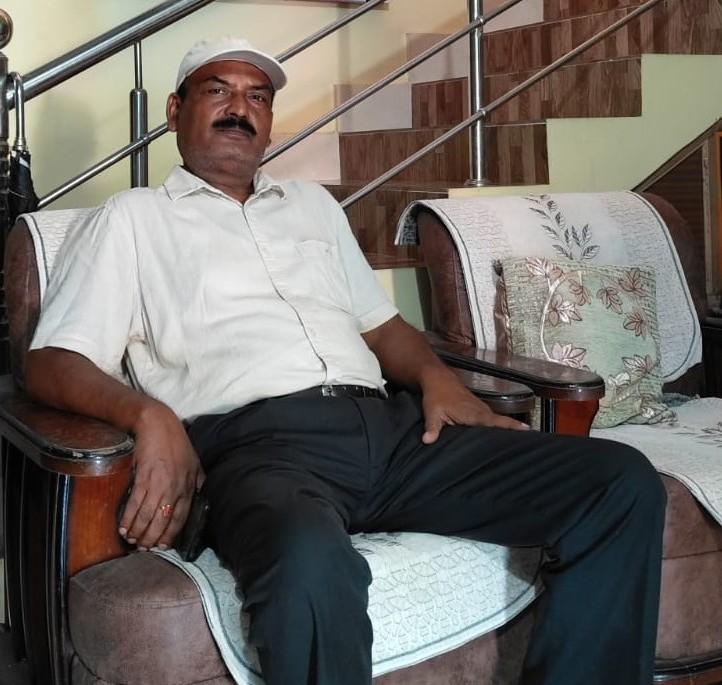
Dr. Rajen Chandra Bora during the interview . Photo: Dishaa Borah
As a child, he had seen a very different Tuni River. The water flowed freely, country boats travelled from one village to another, children spent their afternoons swimming, and fishermen returned home with fresh catches. For the people of Majuli, the river was not just a waterbody; it was part of everyday life.
"The Tuni was alive," he recalled with a gentle smile. "People depended on it in ways that are difficult to imagine today."
But over the years, the river slowly began to lose its strength. Silt accumulated, parts of the river became disconnected, fishing declined, and many villagers gradually turned away from the river that had once sustained them. Watching this transformation was painful for someone who had grown up beside its waters.
Instead of accepting its decline, Dr. Bora decided to act.
For years, he travelled across villages, collected historical records, met local residents, organised awareness meetings and submitted proposals to government departments. What started as one man's concern slowly became a movement supported by many people who believed the Tuni deserved another chance.
His efforts finally gained momentum in 2023, when the Government of Assam approved the Tuni River Rejuvenation Project. Cleaning and restoration work began, bringing hope back to villages that had almost forgotten what a healthy river looked like.
Yet, Dr. Bora believes that restoring the river is only the first step.
He dreams of a future where visitors travel along the Tuni by boat, stop to watch migratory birds, experience the culture of Majuli's villages and contribute to the local economy. According to him, sustainable tourism can create employment while encouraging people to protect the river rather than exploit it.
As our conversation came to an end, he looked once more towards the flowing water and quietly said,
"A river can survive only when its people decide to protect it."
Walking away from Pohardia, we realised that before the Tuni River could tell its own story, it needed someone willing to speak for it. For many people in Majuli, that person has been Dr. Rajen Chandra Bora.
Bodon Satula believes the ongoing rejuvenation project has given the river a second chance. If tourism is developed responsibly, he says, it could create employment for young people who are forced to leave their villages in search of work.
"The next generation should not have to leave Majuli to earn a living," he said. "If the river lives again, many opportunities will return with it."
Before we left, Bodon pointed towards the banks of the Tuni and shared one final wish. He hoped to see trees planted along both sides of the river, making it greener and more welcoming for visitors. For him, a beautiful river is not only about flowing water—it is about people caring for the landscape that surrounds it.
Our journey continued towards another village, where the river had left behind a different kind of memory. There, we met women who still remembered the floods of 1998, 2004, and 2008—years that changed their lives forever.
As the sun slowly moved westward, our journey brought us to Bishnupur Koiborta Gaon, a village where life has always revolved around the Tuni River. Here, the river is more than a scenic landscape—it is part of everyday survival. It provides water for livestock, serves as a route for transportation, and for generations, it has been the source of food and income for many families.
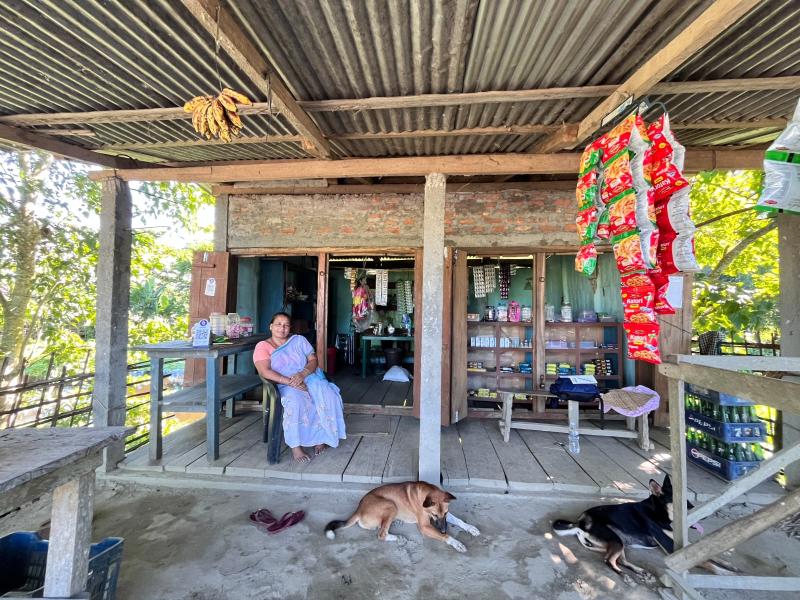
Mamoni Das sitting outside her small shop. Photo: Dishaa Borah
Among those who shared their story with us was Mamoni Das (45).
Sitting outside her small shop, Mamoni spoke of a river that had given her family countless memories, but had also tested their strength time and again.
"We have lived with the river all our lives," she said. "Sometimes it gives, and sometimes it takes away."
For years, fishing was an important part of life in the village. The Tuni River provided fish not only for daily meals but also for earning a living. Today, however, fishing has come to a halt. With the river undergoing rejuvenation work, fishing has remained prohibited for the past three years. While the restriction has affected many families, Mamoni understands that restoring the river is necessary if it is to survive for future generations.
As the conversation continued, the topic shifted to floods. Without hesitation, she recalled the years 1998, 2004, and 2008—dates that remain deeply etched in the memories of the villagers. Houses disappeared beneath floodwaters, livestock were swept away, and farmland that once sustained families was left buried under layers of sand and silt.
Even after rebuilding their lives more than once, the memories remain impossible to forget.
Today, another concern worries the villagers. Mamoni explained that the water quality has declined over the years, a change many residents associate with the Potiya Sluice Gate, where the reduced flow of water has affected the river's natural condition.
As evening approached, a few visitors stopped along the riverbank to watch the sunset. Some lifted their cameras towards the sky, while others simply stood in silence, enjoying the peaceful landscape. Watching them, Mamoni smiled.
If people can see the beauty we have always seen," she said, "they will come back again."
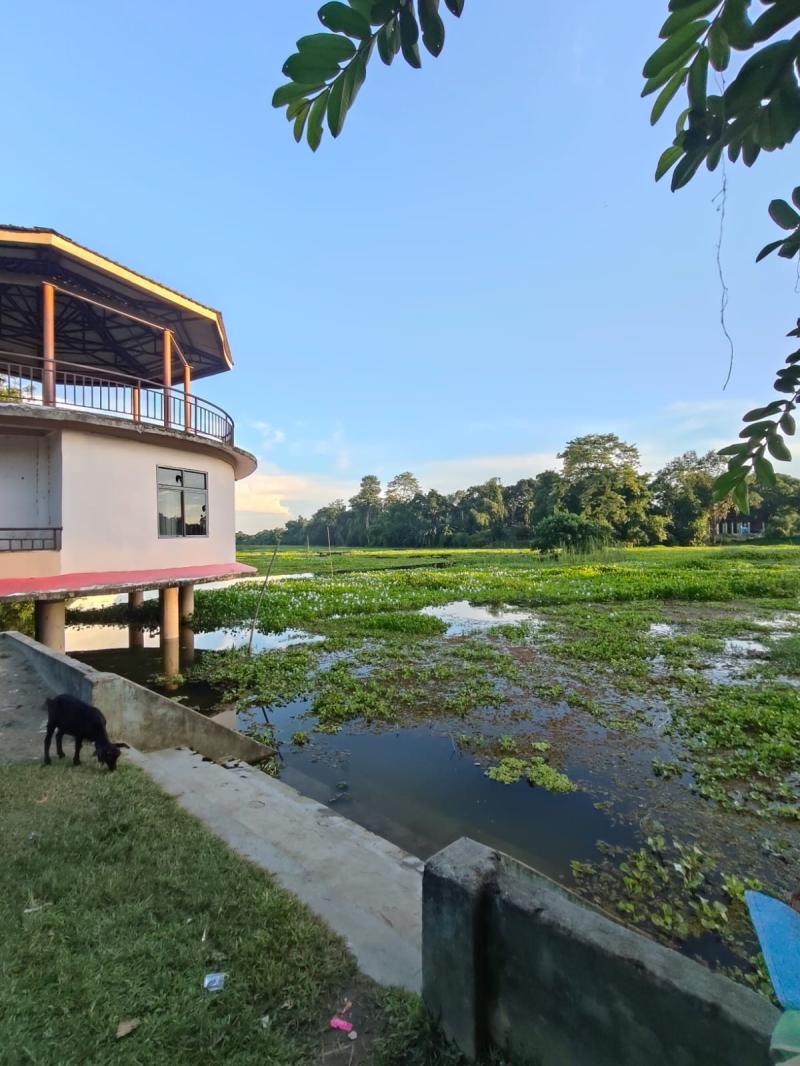
Photo: Dishaa Borah
For Mamoni, the future of the Tuni River is not measured only by cleaner water or restored banks. It is measured by the possibility that one day the same river which once brought destruction might also bring opportunity—not just for her family, but for the entire village.
By the time we reached Dadhora Village, the pace of our journey had slowed. The road became quieter, lined with bamboo groves and open fields. Here, the Tuni River is known by another name—Sukan Suti. Although the name changes, the bond between the river and the people remains the same.
It was here that we met Sarubaiti Das (40).
Unlike many of the people we had spoken to earlier, Sarubaiti's memories of the river were not filled with stories of destruction. Living just a few steps away from Sukat Suti, she has spent most of her life alongside its calm waters. For her family, the river has never been a threat—it has always been a companion.
"We have always lived close to the river," she said with a smile. "It has never troubled us."
Fishing is still a part of their everyday life. Whenever the opportunity arises, the family heads towards the river with simple fishing nets, returning home with whatever the water offers. It may not be enough to earn a fortune, but it continues a tradition that has been passed down through generations.
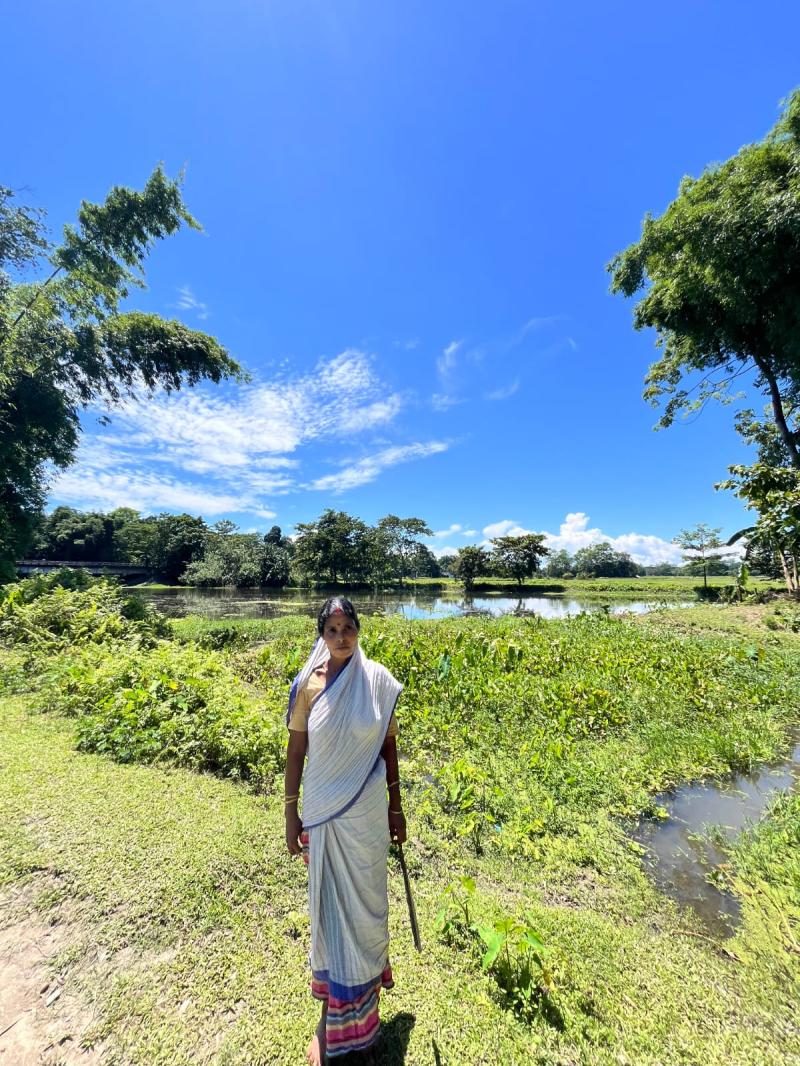
Sarubaiti Das near Sukan Suti. Photo: Dishaa Borah
As we sat beside the river, the surroundings spoke for themselves. Birds moved quietly through the trees, a light breeze rippled across the water, and the village carried on at its usual pace. It was a reminder that the Tuni River is not remembered only for floods or restoration projects. In some places, it is simply a part of everyday life.
When asked about the future, Sarubaiti did not speak of large developments or ambitious plans. Her hope was simple—that the river should remain clean, continue flowing, and be cared for by the people who depend on it.
"If the river stays healthy," she said softly, "the village will stay healthy too."
Leaving Dadhora, we realised that every village had shown us a different face of the Tuni River. For some, it represented survival. For others, it carried cherished memories or hopes for tourism. Yet, despite their different experiences, everyone agreed on one thing—the future of the river depends on the people who choose to protect it.
As our journey came to an end, the stories we had gathered no longer felt like separate interviews. Together, they formed the story of a river that continues to shape lives, even as it searches for a new beginning.
As the day drew to a close, we found ourselves standing quietly beside the Tuni River once again. The conversations we had over the past few days echoed in our minds. Every village had shown us a different side of the river. Some remembered abundance, some remembered loss, while others looked towards the future with hope. Yet, despite their different experiences, one thing remained common—no one spoke about the Tuni River as if it were just a river.
Listening to these stories, it became clear that the future of the Tuni River cannot be measured only by the success of the ongoing rejuvenation project. Restoring a river means restoring the relationship between people and nature. Clean water, healthy biodiversity, active community participation, and responsible tourism must move together if the river is to flourish once again.
The Tuni River already possesses everything needed for sustainable river tourism. Its peaceful surroundings, winter birdlife, traditional villages, cultural celebrations, and centuries-old history offer experiences that cannot be created artificially. What the river now needs is careful planning, proper maintenance, and the involvement of local communities in every stage of its development.
During our field visit, many villagers shared the same belief—that tourism could create new employment opportunities without disturbing the natural beauty of Majuli. Boating, bird watching, homestays, traditional food, handicrafts, guided village walks, and cultural experiences could all become part of a sustainable tourism model. Such initiatives would not only strengthen the local economy but also encourage younger generations to remain connected to their villages.
The efforts to revive the Tuni River began with local initiatives long before the government restoration work started. According to Dr. Rajen Chandra Bora, a committee for the rejuvenation of the Tuni River was formed in 2015, followed by awareness meetings, public discussions and memorandums submitted by residents of villages along the river. In November 2022, the committee documented the river and collected the necessary information for the proposed rejuvenation project. A professional photographer was also engaged to document approximately 24 kilometres of the river, and the collected information was submitted through the Deputy Commissioner of Majuli.
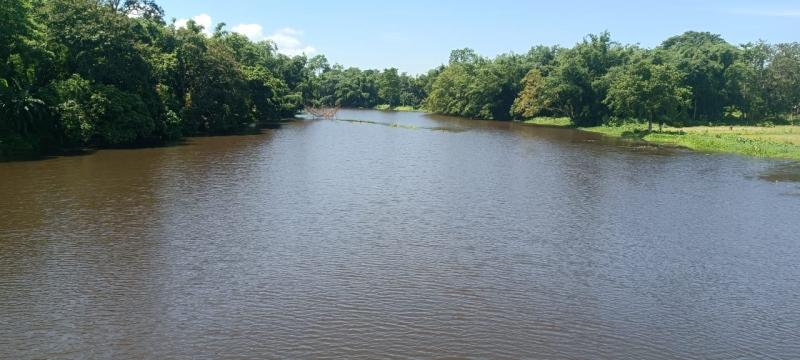 A stretch of Tuni River after rejuvenation. Photo - Special arrangement through Dr. Rajen Chandra Bora
Following a discussion the Chief Minister’s office in 2023, Rs. 21 crore was approved for the cleaning and necessary dredging of the Tuni River, with the work planned over a period of two years. Restoration works subsequently began in different stretches, including the portion passing through Barhula Village, where cleaning work has been completed. The committee has also raised the need to rejuvenate Bhakati Beel, an approximately 18-kilometre-long dry stream historically connected with the Tuni River. Alongside river restoration, efforts have also focused on developing the Tuni as a tourism destination, including an attempt to introduce boating for visitors.
The people we met did not ask for large hotels or crowded tourist destinations. They wished for a clean river, flowing water, healthy fish populations, and visitors who would respect the beauty and culture of Majuli. Their vision of tourism was simple—it should protect the river while improving the lives of those who depend on it.
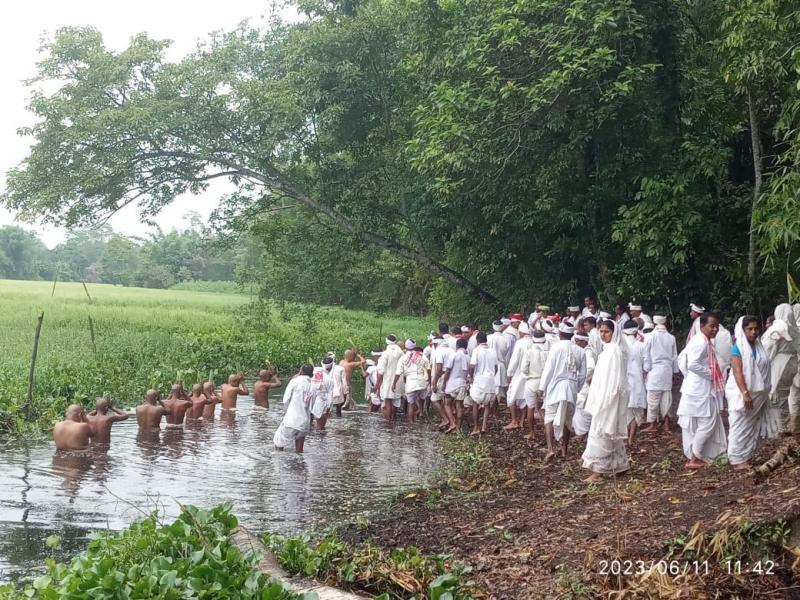
Rituals performed by local communities on the banl of Tuni river. Photo - Special arrangement through Dr. Rajen Chandra Bora
As we prepared to leave, the Tuni River flowed quietly beside us, just as it had throughout our journey. It carried no words, yet it had told countless stories through the people who call its banks home. Their memories, struggles, resilience, and hopes reminded us that a river is never defined only by its water. It is defined by the lives that grow around it.
Perhaps years from now, when another traveller walks along these same banks, they will no longer hear stories of a river struggling to survive. Instead, they may hear stories of a river that found its way back to life—and of the people who never stopped believing that it could.
The future of the Tuni River is still being written.
 Navigations
  Quick Contact
 Subscribe Us
 Quick Mail